Showing posts with label Gladiator. Show all posts

Friday, 6 July 2012

Gladiator against the odds


On 2 June 1940, RAF No. 263 Gladiator-equipped Sqn was in combat in northern Norway. On that day, the order to evacuate the scandinavian country was issued, and the biplane fighters were soon in action, covering the withdrawal of British troops from Narvik.
In the early afternoon two Gladiators, flown by Plt Off Louis Jacobsen and Plt Off Wilkie took off to patrol the area between Narvik and the Swedish border. They intercepted some Bf 110, and in the quick dogfight that followed Wilkie was shot down by German ace Helmut Lent.

The Germans disappeared into the clouds, and Jacobsen continued his mission alone. While flying along the border, the RAF pilot sighted and formation of enemy bomber over Bjornfell, which he attacked shooting down on Dornier Do 17 from 4.(F)./ObdL. Jacobsen was then attacked by Ju 88s (most probably Bf 110s) tand furiously defended himself in series of head-on attacks. During the dogfight, the British pilot seized his chance and closed within 50 yd of a Heinkel He 111, firing a three second burst and shooting it down.

He was then, again, surrpounded, by Bf 110s and the remaining He 111s. The Gladiator received hits in the oil cooler and the windscreen was covered in oil. Jacobsen was in that moment attacking a second Heinkel, so he fired almost blindly at the enemy. The German bomber plunged to earth with both its engines on fire, crashing over the Swedish border. Now low on fuel, Jacobsen headed back to base at low level.

One of the He 111 shot down was 1H+CK (WNr 5607) of 2./KG 26, which made an emergency landing on the Norwegian side of Lake Grövelsjön. All crew members survived and where picked up by an Heinkel He 115 the following day. According to Hakans aviation page, the Heinkel is still visible today.


Image of the He111 in Lake Grövelsjön the day after the emergency landing. 

The remains of the He111 in Lake Grövelsjön today Source: Hakans Aviation Page.

Post war research credited Jacobsen with a fourth kill: a Ju52/3m of KGzbV 107 was chased over the Swedish border by a Gladiator, and fired on by Swedish defence forces. It is not clear whether AA or Jacobsen shot down the aircraft, however the British pilot was credited with four kills for this mission.

Despite such gallant episodes, there was nothing No. 263 Sqn could to prevent the Germans from kicking British forces out of Norway. The squadron continued its patrol until 7 June, when it embarked on HMS Glorious together with Hurricanes of No.46 Squadron. In 13 days of operations, the biplane squadron was engaged in 72 combats, claiming 26 victories (post war research suggest 35), loosing only two Gladiators.

Tragically, the aircraft carrier HMS Glorious was attacked and sunk on 8 June byt the heavy cruiser Scharnorst and Gneisenau, with the loss of 1,519 lives, including all men from No. 263 Sqn.


Friday, 29 June 2012

Gloster Gladiator: The First and the Last

FIRST VICTORY OF THE WAR

During the first weeks of the war, the Luftwaffe started its offensive operations against Great Britain sending reconnaisance flights over Royal Navy bases. To counter this threat, No. 607 Sqn moved to Acklington with its Gloster Gladiators.
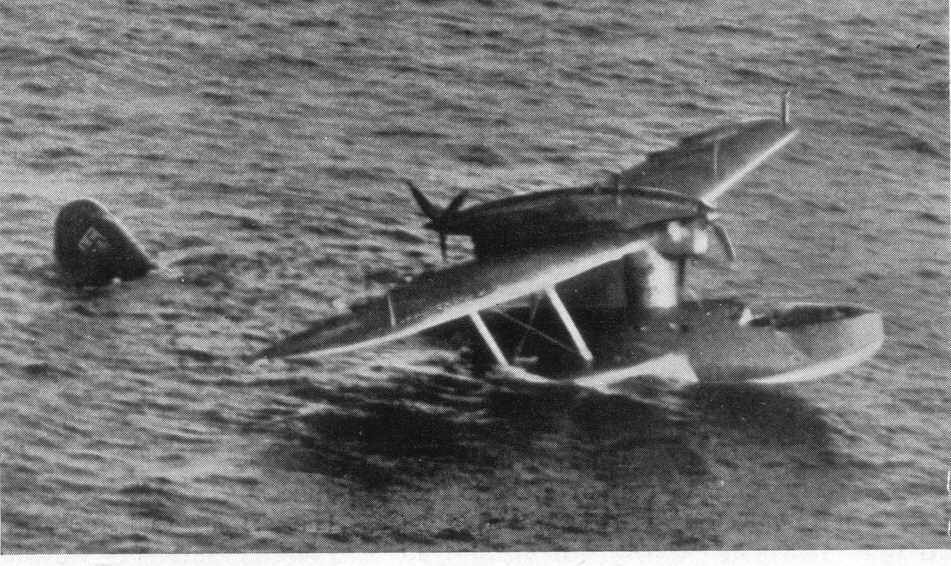
In the morning of 17 October 1939, Flt Lt J Sample, Flg Off G D Craig and Plt Off W H R Whitty of "B" flight were scrambled and directed towards an incoming enemy aircraft over the North Sea. The enemy was a Dornier DO 18 flying boat. 
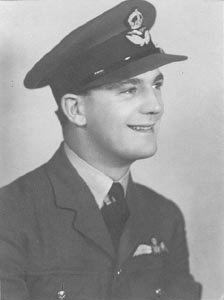
Pilot Officer William Hubert Rigby "Nits" Whitty

The Gladiators  bounced on the Dornier, which went into a dive and levelled off 50 ft above the water, and then down to 20 ft. The three RAF fighters attacked in turn from the stern, hitting the Do 18 which soon started to pour fuel from its wing tanks. The pilot, Oblt zur See Seigfried Saloga, landed the plane in the water and was rescued, together with his crew, by a RN destroyer.

John Sample flew during the sortie K7995/AF-O, while Whitty was flying in K8026-L.
The Dornier DO 18 was "8L-DK", from 2./KuFlGr 606.


FIRST KILL IN NORTH AFRICA

When Italy declared war on 10 June 1940, Gladiator-equipped No. 33 Sqn was based at Mersa Matruh. The unit flew combat patrols during the following days without seeing any enemy target. In order to be closer to the frontline, the squadron moved to Sidi Barrani on the 13th. 
On the following morning, three fighters took off to fly an offensive patrol west of Bardia. The three pilots were Flg Off E H "Dixie" Dean (N5782), Plt Off Vernon Woodward (N5783) and Sgt Craig (N5768).
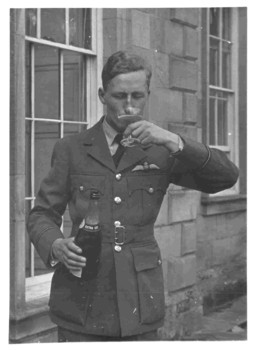
Vernon Woodward

At that time, no radars or any other warning systems were available, so the fighters were tasked with patrolling along and over the frontline to report the enemy's movements. During that 14th June, the Gladiator-unit intercepted an Italian Caproni Ca.310 light bomber, escorted by six CR.32s.
Dixie Dean attacked the fighters but was soon embroiled in a dogfight when the Italians split up in all directions and formed a ring around him. Dean was forced to throttle back, yaw and waffle up and down to avoid each pass, being able to fire quick rounds every time the CR.32s came into his sight.

Ernest "Dixie" Dean
He escaped unscathed and, upon returning to base, he was notified of having destroyed one of the enemy fighters, while Woodward and Craig shared the bomber.


LAST GLADIATOR VICTORY IN WW2

The honour of scoring the last Gloster Gladiator kill in history goes to Finnish pilot Hakan Stromberg. On 15 February 1943, after the sun had set and darkness was covering the Lake Ladoga front, 1 Lt Stromberg took off for a recce missions, flying over roads, airfields and stations along the Murmansk railway, between the White Sea and Lake Onega.
At 20:05 hrs, the Finnish pilot spotted an R-5 taking off from Karkijarvi airfiled. He gave chase and shot down the Soviet aircraft with two bursts. Stromberg was flying GL-273 for his sortie, and was killed with the same machine on 7 April, when he crashed at Karkijarvella.